
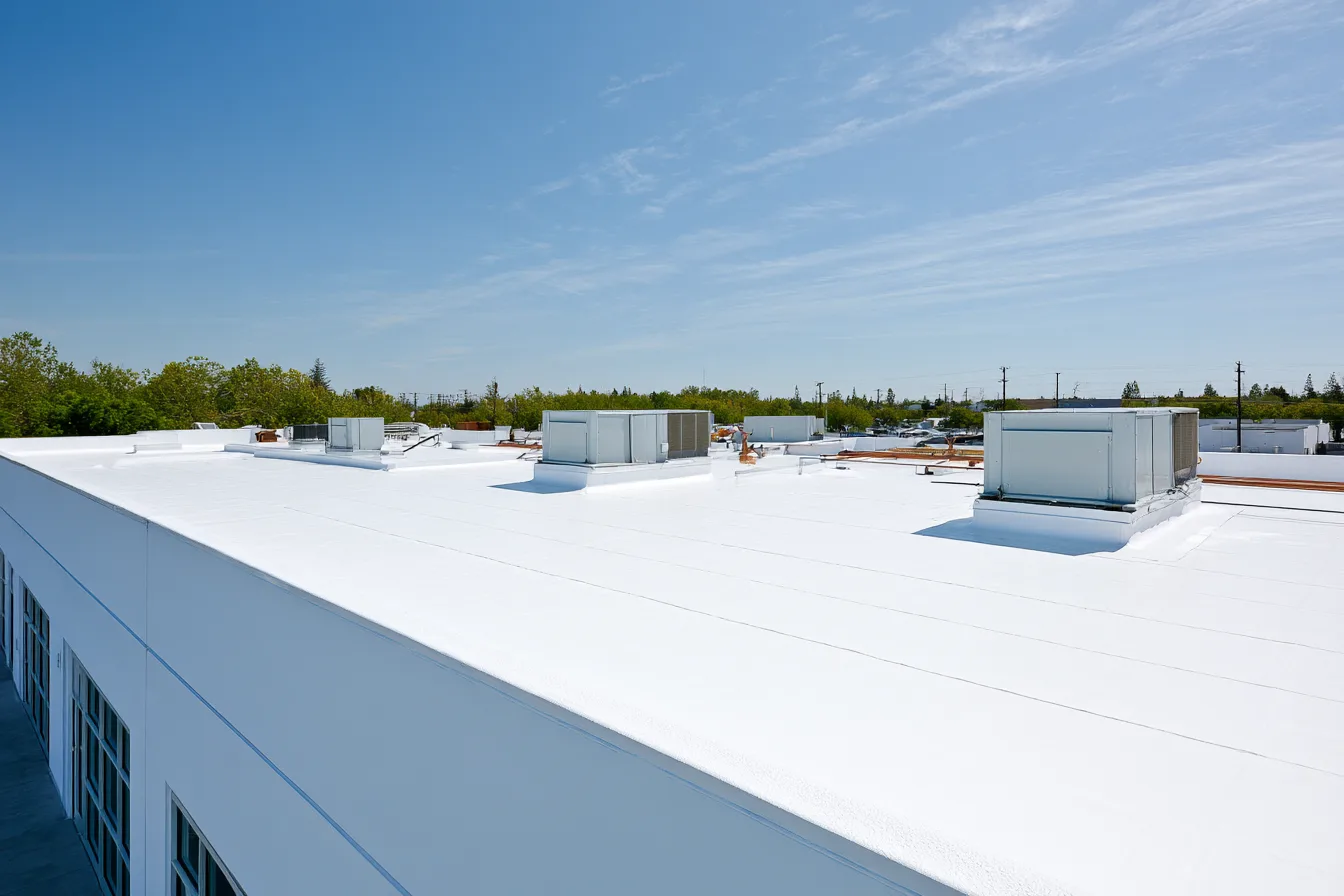
A low-slope roof depends on an open path to its drains. Cold weather makes a drainage problem harder to ignore.
Drainage Is Part of the Roof Assembly
A commercial roof sheds water through its slope and outlets. Leaves, litter and equipment debris can obstruct a drain basket or gutter, while a low area can retain water even when the outlet is clear. Those are different causes and need different solutions.
Before colder weather, a drainage review helps identify what is blocking flow and what is a roof-design or slope issue. It does not require a property owner to climb onto the roof.
Standing Water and Cold Weather
When retained water freezes, the condition around drains and roof transitions deserves attention. Ice does not establish that every membrane has failed, but a blocked water path leaves the roof exposed to longer periods of water than intended.
A coating cannot create meaningful drainage slope. Surface restoration should follow the drainage evaluation, not be used to conceal an unresolved low area or obstruction.
The Details Beside the Drain
The membrane-to-drain connection, clamping components where present and nearby flashings need inspection along with the basket. Water can enter at a failed connection even if the drain itself is open.
Rooftop equipment work also matters. Materials left behind can move with wind or runoff and collect at outlets, while service traffic can damage the weather surface nearby. Drain care and roof condition belong in the same maintenance conversation.
Planning Commercial Roof Maintenance in Odessa
A maintenance discussion should account for the roof system, previous leak areas and access to the building. Repair findings and drain locations are useful parts of the roof record when planning future work.
Call about drainage concerns, an existing leak or a planned roof review. A free inspection can start the discussion around the actual Odessa property.